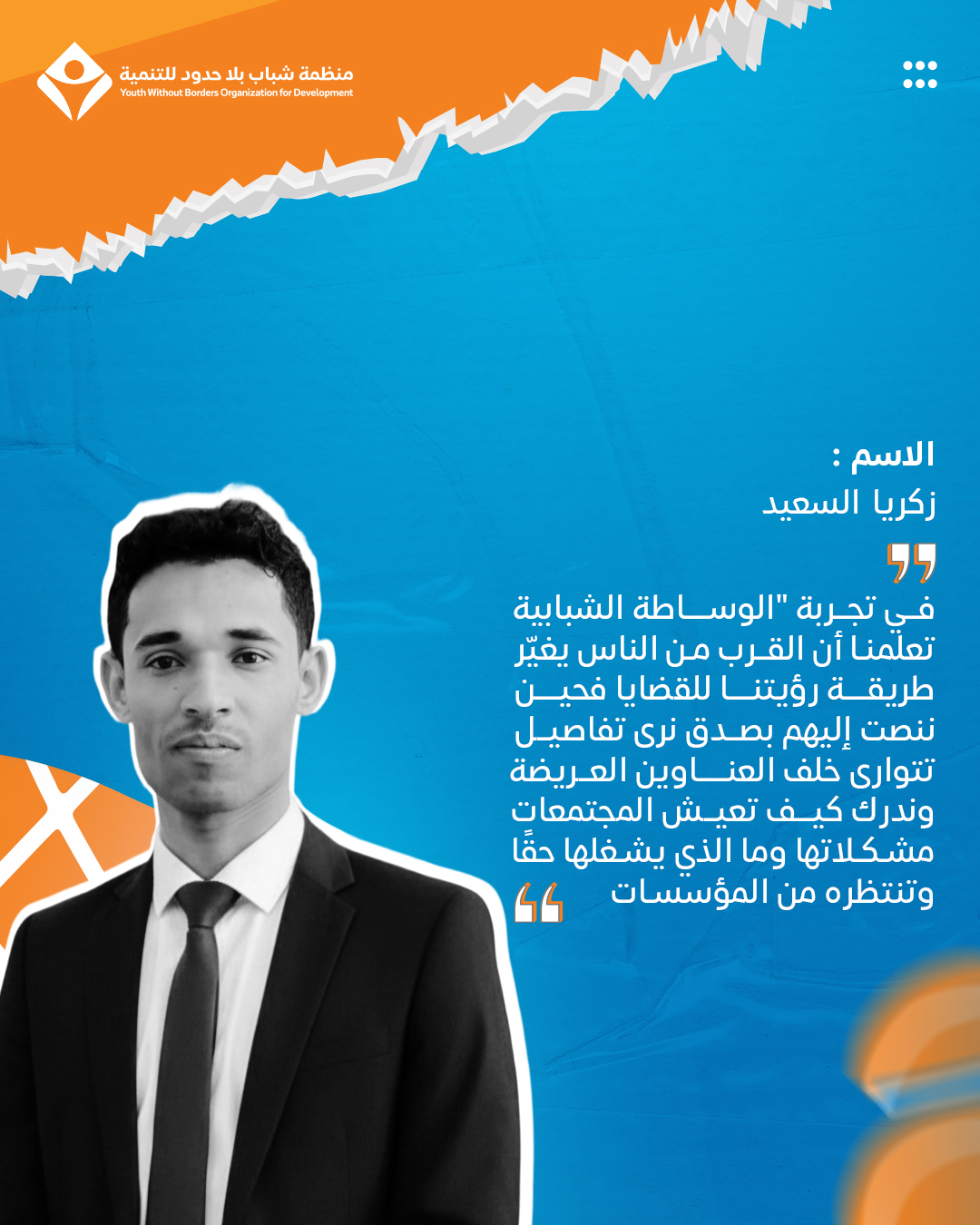
Through his experience with the Youth Mediation Team, he discovered that being close to people changes the way we understand issues. When young people genuinely listen to their communities, they begin to notice details that often remain hidden behind broad headlines and gain a clearer understanding of what people truly need and expect from institutions.
In times of crisis and priorities become more complex, making it difficult for institutions to follow every community concern. Yet people’s issues remain, and they still need someone who can listen, understand their dimensions, and help move them toward appropriate solutions. This is where he believes young people can play an important role.For him, mediation is more than a tool for resolving disputes. It has become a practical way of understanding society. Through mediation, he learned active listening, how to understand overlapping interests, manage differences, and recognize when an issue requires community dialogue or specialized institutional intervention.
With every issue he engaged with, his understanding of the community deepened. He began to see community work as a genuine bridge to participation in public life. Young people who understand people’s needs can communicate community priorities to decision-makers and contribute more effectively to shaping solutions.His understanding of youth participation also changed. He came to believe that meaningful participation does not begin only in meetings or decision-making spaces; it begins with a real understanding of the communities young people seek to serve.
He now sees youth mediation as a space where young people learn about their communities while building stronger channels of communication with institutions. In this space, young people can help connect community voices with decision-makers through their field knowledge and ability to communicate.“The closer young people are to people, the better they can understand their priorities, carry their voices, and contribute to decisions that reflect the reality of their communities.”